



On this page0%
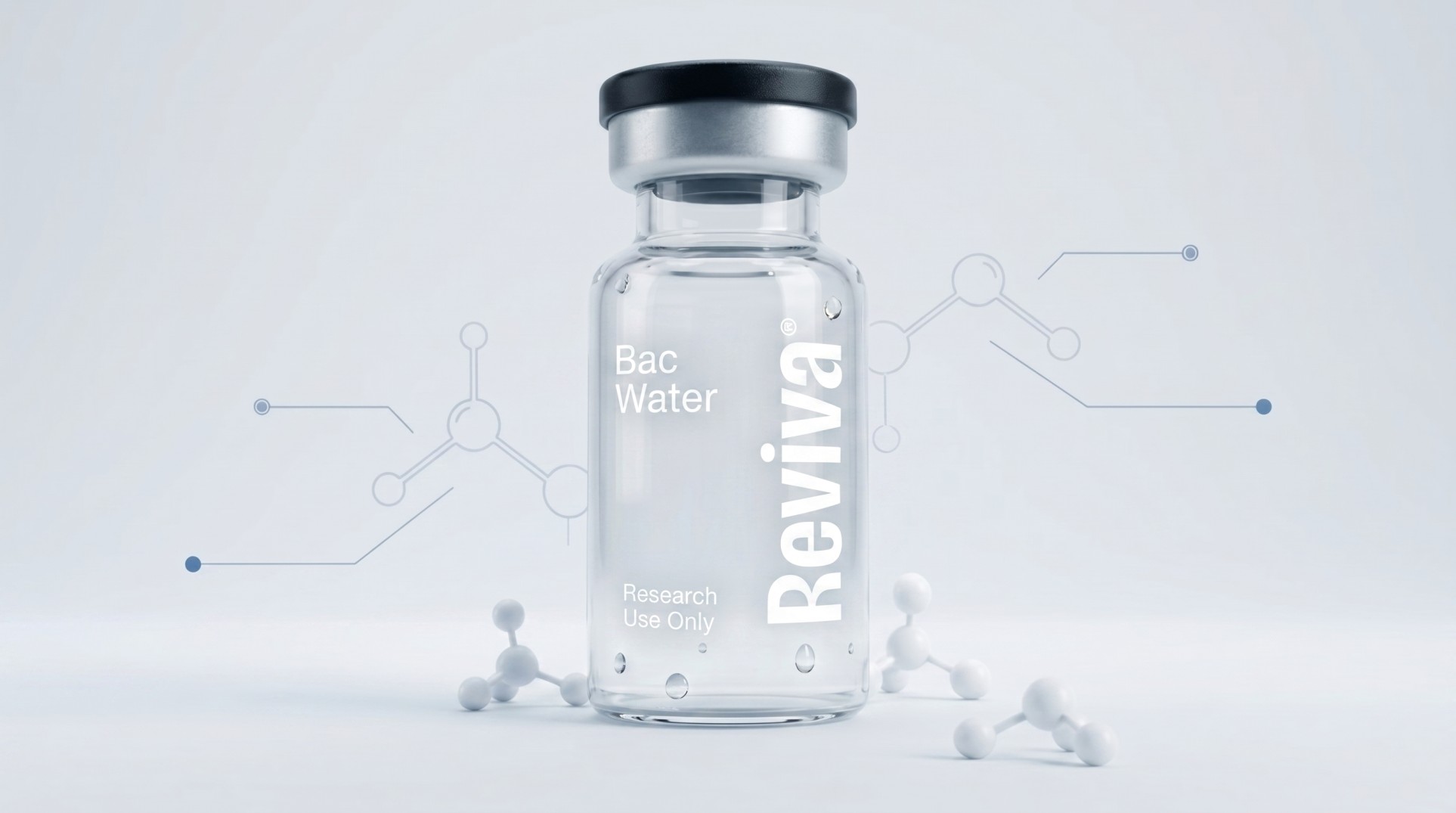
Among the many terms encountered during reconstitution and laboratory preparation, few appear as frequently as bacteriostatic water. Researchers see it referenced in preparation guides, storage discussions, and laboratory protocols. Despite its widespread use, its purpose is frequently misunderstood.
At first glance it may appear to be nothing more than sterile water. The two share similarities, but they are not identical — and the distinction becomes important when considering storage practices, repeated access to a container, and preparation workflows. Understanding what bacteriostatic water is, how it differs from sterile water, and why it is so commonly used provides useful context for many laboratory preparation procedures.
What is bacteriostatic water?
Bacteriostatic water is purified, sterile water that has been prepared for laboratory use and contains a small amount of a bacteriostatic agent — most commonly 0.9% benzyl alcohol. The term bacteriostatic refers to the ability to inhibit the growth of certain bacteria.
Importantly, bacteriostatic does not mean sterilizing. It does not eliminate all microorganisms, nor does it guarantee indefinite protection against contamination. Instead, the bacteriostatic component helps discourage bacterial growth under the intended conditions of use. That single characteristic is what distinguishes bacteriostatic water from sterile water alone.
How does it differ from sterile water?
Both sterile water and bacteriostatic water are prepared under controlled conditions and are common in laboratory settings. The primary difference lies in formulation:
- Sterile water contains only purified, sterile water.
- Bacteriostatic water contains purified, sterile water plus a small amount of a bacteriostatic preservative.
Because of that preservative, bacteriostatic water is often selected when repeated access to a preparation container may occur over time. The preservative is intended to reduce the likelihood of bacterial proliferation under normal handling conditions — something plain sterile water cannot do once a container has been opened and accessed more than once.
Why is it commonly used?
One reason bacteriostatic water is so widely used is convenience. Many laboratory workflows involve preparation procedures where a solution may be accessed more than once. In these situations, researchers often prefer a preparation medium designed to support repeated use, and the bacteriostatic agent provides an additional layer of protection compared with sterile water alone.
This does not replace good laboratory practice. Proper handling, storage, and contamination control remain essential. But the presence of a preservative contributes to the practical utility of bacteriostatic water in many research environments — which is why it is the usual diluent recommended in our reconstitution guide and why bacteriostatic water is kept alongside the compounds it prepares, from BPC-157 onward in Peptide Pedia.
Does bacteriostatic mean permanent protection?
No — and this is one of the most common misconceptions. The presence of a bacteriostatic agent does not eliminate the need for proper storage or careful handling. Contamination can still occur if appropriate procedures are not followed. The preservative helps reduce bacterial growth under intended conditions, but it is not a substitute for good laboratory practice. Researchers should continue to follow recommended handling and storage procedures regardless of the preparation solution being used.
Why preparation solutions matter
When discussing reconstitution, researchers often focus on the compound being prepared. Equally important is the environment that compound is introduced into. Factors such as:
- Solution composition
- pH
- Preservatives
- Storage conditions
- Handling frequency
can all influence preparation practices. Understanding the characteristics of a preparation solution helps researchers make more informed decisions about laboratory workflows — and connects directly to how concentration is set during preparation, a topic covered in Understanding Concentration & Dilution.
Common misconceptions
Another misconception is that bacteriostatic water somehow improves a compound. Its purpose is not enhancement — its role is to serve as a preparation medium with preservative properties. Similarly, the presence of a bacteriostatic agent does not imply that all compounds behave identically once reconstituted. Stability characteristics remain dependent on the material itself, its storage conditions, and the preparation procedure, as explored in Lyophilized vs Reconstituted Compounds. Bacteriostatic water is one component within a broader preparation process.
Looking beyond the label
The term bacteriostatic water appears so frequently that it can seem routine. Yet understanding why it exists reveals an important principle of laboratory preparation: preparation media are not interchangeable by default. Different solutions are formulated for different purposes, and the right choice depends on the characteristics of the material, the intended workflow, and the broader handling strategy. Viewed that way, bacteriostatic water represents more than a simple ingredient — it reflects a practical approach to preparation and storage in laboratory environments.
Key takeaways
Key Takeaways
- Bacteriostatic water is purified, sterile water containing a small amount of a bacteriostatic preservative (commonly 0.9% benzyl alcohol) that inhibits bacterial growth.
- It differs from sterile water because of that preservative, and is commonly used in preparation procedures involving repeated access to a container.
- "Bacteriostatic" means growth-inhibiting, not sterilizing — it does not provide permanent protection or replace careful handling.
- Preparation media are not interchangeable; the right solution depends on the material, the workflow, and the storage strategy.
- Understanding its role helps researchers interpret preparation procedures and laboratory workflows more accurately.