



On this page0%
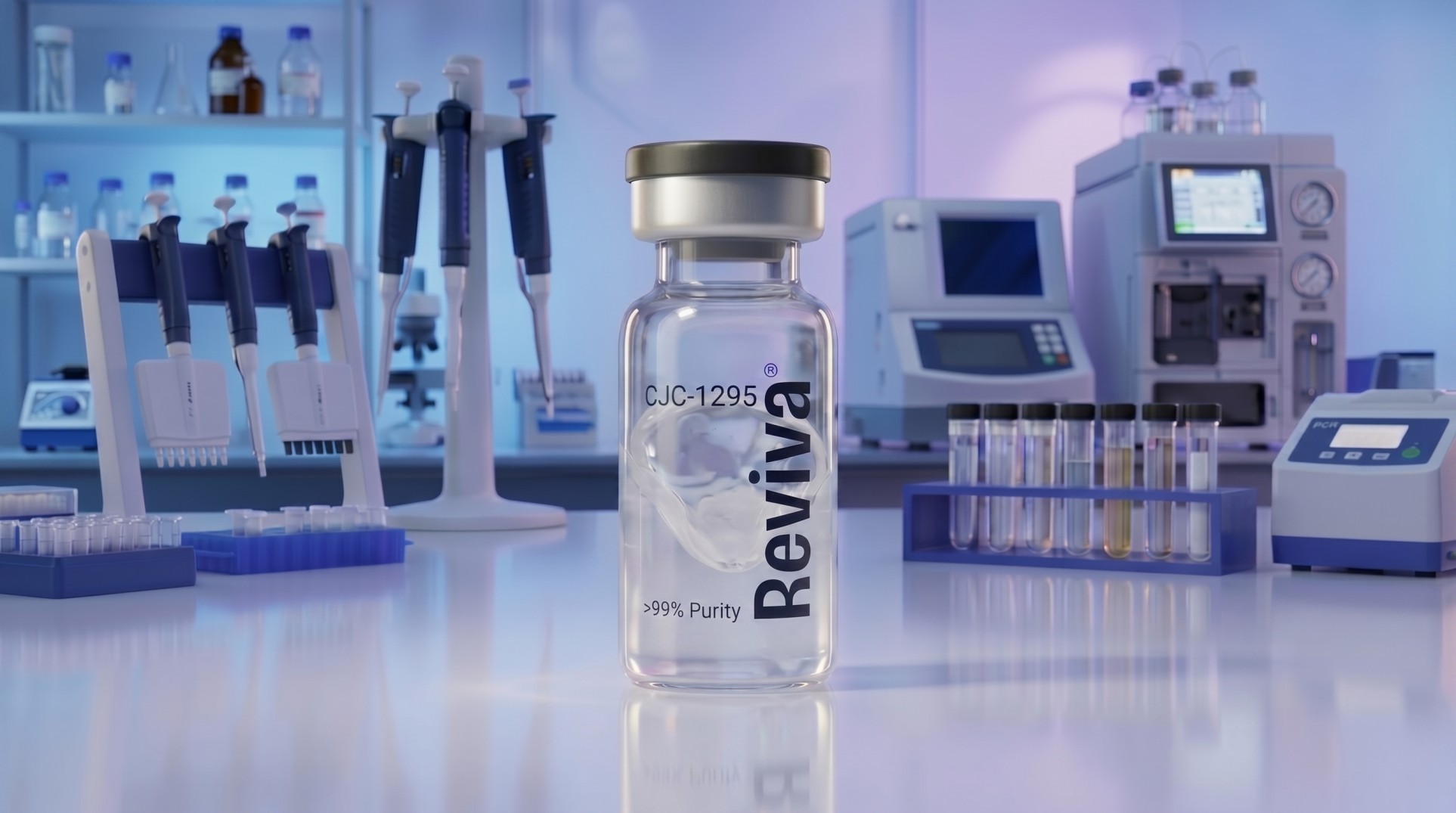
Researchers occasionally encounter an unexpected phenomenon during reconstitution. A peptide that appears as a dry, lyophilized powder dissolves after the addition of a preparation solution, yet the resulting mixture becomes unusually thick, cloudy, or gel-like. For those encountering it for the first time, the experience can be surprising — and the assumption is often that something has gone wrong.
In reality, gel formation is not always an indication of contamination, degradation, or preparation failure. In many cases, it reflects the physical and chemical characteristics of the peptide itself. Understanding why certain peptides behave this way requires examining a few related concepts: solubility, concentration, molecular interactions, and pH.
Not all peptides behave the same way
One of the most important principles in peptide science is that different compounds can behave very differently once introduced into solution. Two peptides may appear similar in lyophilized form while exhibiting entirely different characteristics after reconstitution.
Some dissolve almost instantly and remain clear. Others require additional mixing. Some may produce slightly cloudy solutions, while others become noticeably more viscous. These differences arise from the unique structural properties of each molecule. The transition from a dry powder to a liquid environment introduces a wide range of molecular interactions that simply do not exist in the lyophilized state.
What does "gelling" actually mean?
The term gel is often used broadly. In practice, several different phenomena can be mistaken for gel formation:
- Increased viscosity
- Molecular aggregation
- Partial precipitation
- Network formation within solution
- Temporary solubility changes
While the visual appearance may be similar, the underlying causes can differ significantly. This is one reason understanding the conditions surrounding preparation matters — not every cloudy or thickened solution represents the same process.
The role of solubility
Solubility describes how readily a substance dissolves within a given solution. Every peptide possesses unique solubility characteristics. Some remain highly soluble across a broad range of conditions; others are considerably more sensitive to concentration, temperature, or solution chemistry.
When solubility limits are approached, peptides may begin interacting with one another rather than remaining evenly dispersed throughout the solution. These interactions can contribute to thickening, aggregation, or gel-like behavior. The peptide itself has not necessarily changed — its environment has.
Why pH matters
Among the many factors influencing peptide behavior, pH is one of the most significant. pH affects the electrical charge carried by a molecule, and as charge distribution changes, molecular interactions may change as well.
Under certain conditions, peptides become more prone to interacting with one another rather than remaining evenly dispersed. This can increase the likelihood of:
- Aggregation
- Reduced solubility
- Viscosity changes
- Gel-like structures
Different peptides respond differently to pH changes. A solution that remains stable for one compound may behave very differently for another, which is precisely why formulation scientists devote significant attention to pH optimization during product development.
Why certain peptides receive attention
Researchers frequently discuss compounds such as CJC-1295 and Tesamorelin when the topic of gel formation arises (their background is covered in Peptide Pedia: CJC-1295 and Tesamorelin). These peptides are often mentioned because they can exhibit sensitivity to preparation conditions, concentration, and solution chemistry.
The important point is not that these compounds are unusual. Rather, they illustrate a broader principle: some peptides possess characteristics that make them more sensitive to environmental conditions than others. Understanding those characteristics helps explain why reconstitution outcomes vary between compounds.
Does gel formation mean the peptide is damaged?
Not necessarily — and this is perhaps the most important misconception to address. The appearance of a thicker or more viscous solution does not automatically indicate degradation, nor does it automatically indicate contamination. In many cases, the observed behavior reflects molecular interactions occurring within the solution rather than destruction of the peptide itself.
Determining the significance of any physical change requires considering multiple factors, including:
- Preparation conditions
- Concentration
- Solution composition
- Temperature
- Storage history
Visual appearance alone rarely provides a complete answer. Whether a change is meaningful is a question of identity and stability, not appearance.
Can gel formation be reduced or reversed?
In many cases, researchers can reduce or eliminate gel-like behavior by adjusting preparation conditions. The appropriate approach depends on the underlying cause, but common strategies include the following.
Increasing dilution volume
Highly concentrated solutions are generally more prone to molecular interactions. Increasing the amount of diluent may improve solubility and reduce viscosity by allowing molecules to remain more evenly dispersed — a direct application of the ideas in Understanding Concentration & Dilution, and the reconstitution calculator makes the volume change exact.
Allowing additional time
Some peptides dissolve more slowly than others. A solution that initially appears cloudy or viscous may gradually become more uniform after sufficient time has been allowed for hydration and dissolution.
Gentle mixing
Researchers typically avoid vigorous shaking. Gentle swirling or slow inversion is often preferred to encourage dissolution while minimizing excessive physical stress on the solution.
Evaluating temperature conditions
Temperature can influence solubility and molecular behavior. Allowing a solution to reach an appropriate preparation temperature before mixing may improve dissolution characteristics for certain compounds.
Reviewing solution chemistry
In some cases, pH and formulation conditions influence peptide behavior. Small changes in the solution environment — including the choice of preparation medium — can sometimes affect aggregation tendencies and overall solubility.
Because peptide characteristics differ significantly between compounds, there is rarely a universal solution that applies in every situation.
The goal is understanding, not forcing dissolution
When a peptide exhibits gel-like behavior, the objective should not simply be to force the material into solution. Instead, researchers benefit from understanding the conditions contributing to the observed behavior.
Gel formation often provides information about the interaction between the peptide and its environment. By considering factors such as concentration, pH, temperature, and preparation conditions — and following sound reconstitution and storage practice — researchers can better interpret what they are observing and make more informed decisions about preparation procedures.
Concentration matters
Concentration can significantly influence solution behavior. As concentration increases, molecules occupy less available space and are more likely to interact with one another, which increases the probability of aggregation and other intermolecular effects.
For this reason, two researchers preparing the same compound using different volumes may observe different results. The peptide is identical; the concentration is not. Understanding concentration therefore becomes an important part of understanding gel formation.
Looking beyond the surface
When researchers encounter unexpected physical changes, it is tempting to view them as evidence that something has gone wrong. Scientific investigation often reveals a more nuanced reality. Peptides are complex molecules, and their behavior reflects the interaction of chemistry, structure, concentration, temperature, and solution conditions.
Gel formation is one example of how these factors influence physical appearance after reconstitution. Rather than indicating failure, such observations often provide insight into the underlying characteristics of the molecule itself.
Key takeaways
Key Takeaways
- Some peptides may exhibit gel-like behavior, increased viscosity, or cloudiness after reconstitution due to solubility, concentration, molecular interactions, and pH.
- Different peptides possess different physical characteristics, so preparation outcomes can vary considerably between compounds.
- Compounds commonly discussed in relation to gel formation include CJC-1295 and Tesamorelin, which may show sensitivity to preparation conditions.
- Gel formation can often be improved by adjusting dilution volume, preparation time, temperature, or solution chemistry.
- Importantly, gel formation does not automatically indicate degradation or contamination — understanding the broader chemical environment usually provides a more accurate explanation.